The Introduction to React
Hey there! Welcome to the world of React. In this tutorial, we'll explore what React is, its history, and why it has become the go-to library for building user interfaces.
What Is React
React is a JavaScript library for building user interfaces using components. Each component describes a small part of the UI, and React updates only what needs to change. This makes applications faster, more predictable, and easier to reason about.
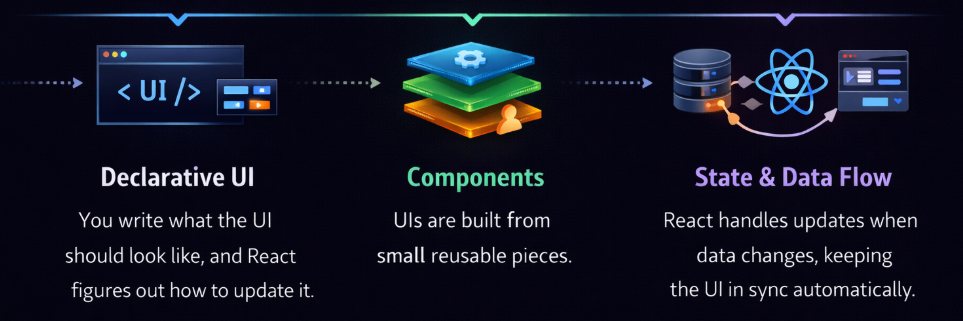
React focuses on three core ideas:
- Declarative UI: You write what the UI should look like, and React figures out how to update it.
- Components: UIs are built from small reusable pieces.
- State and data flow: React handles updates when data changes, keeping the UI in sync automatically.
A Short History of React
React was created at Facebook in 2013 to solve a major problem: complex and constantly changing UIs. Traditional DOM manipulation made large applications slow and difficult to maintain.
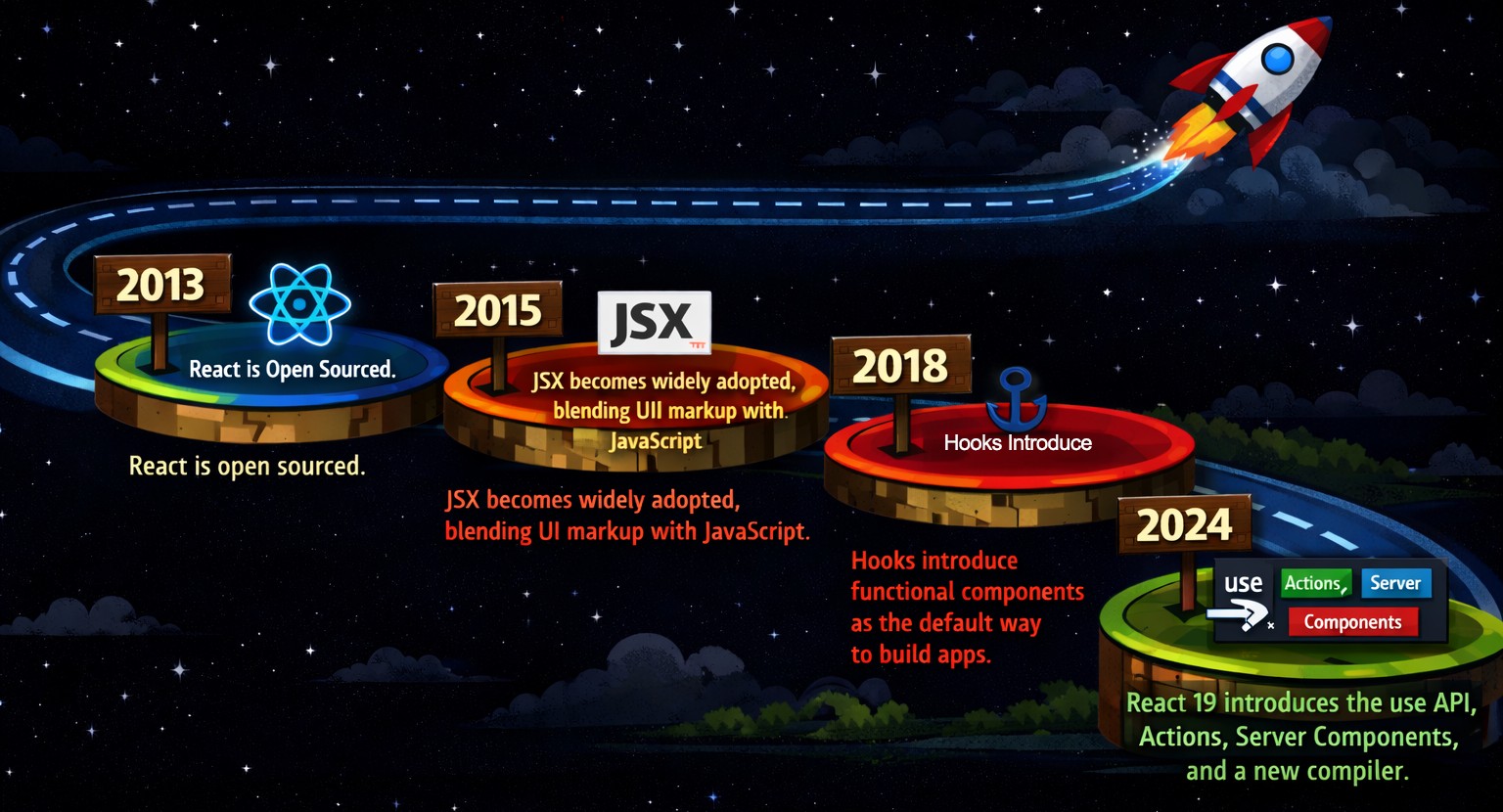
Key milestones:
- 2013: React is open sourced.
- 2015: JSX becomes widely adopted, blending UI markup with JavaScript.
- 2018: Hooks introduce functional components as the default way to build apps.
- 2024: React 19 introduces the use API, Actions, Server Components, and a new compiler.
Why React Became the Go-To UI Library
React is widely used because it combines developer experience with long-term stability and performance.
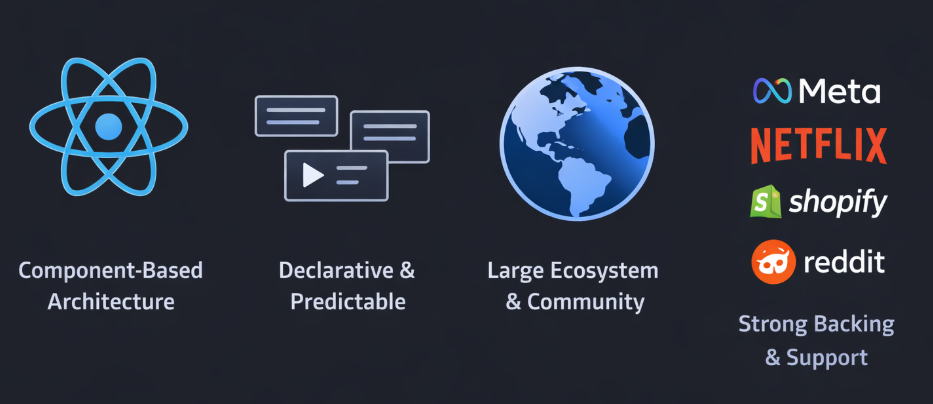
Component-Based Architecture
Breaking UIs into components makes code easier to reuse, test, and maintain.
Declarative and Predictable
Developers describe the UI at any point in time. React handles updates efficiently using its virtual representation of the UI.
Large Ecosystem and Community
React powers millions of applications, from small websites to large enterprise systems. Its ecosystem provides routing, data management, animations, and more.
Strong Backing and Long-Term Support
Backed by Meta and used at companies like Netflix, Shopify, Reddit, and Salesforce, React has proven reliability.
Modern Features in React 19
- The use API for handling data fetching and async logic.
- React Actions for handling controlled state changes and form submission workflows.
- The React Compiler, which automatically optimizes rendering without manual memoization.
- Metadata inside components for better integration with frameworks.
- Improved performance through server components and streaming.
These features make React 19 the most powerful and efficient version yet. With React 19, developers gain a cleaner, more predictable workflow supported by new APIs and automatic performance optimizations. Understanding what React is and why it exists is the first step toward building fast and maintainable applications.